Should board games be open source? It's a slightly uncomfortable question. Board games are traditionally built on tightly protected intellectual property. Rules are copyrighted. Artwork is owned. Trademarks are guarded, and for good reason. Publishing is risky. The margins are incredibly thin and creative labour deserves protection.
Herein lies the paradox: the best of games are those that players mod anyway. They rebalance factions. They create essential expansions and rewrite rulebooks for extra clarity. They sometimes even build digital implementations, and almost always, they improve the system. The question is not whether games evolve. It is whether the industry should acknowledge it.
What does open-source mean?
In software, open-source means access to the code that makes a product work. For tabletop games, the equivalent involves a different set of layers:
- Rules and mechanics — source files for forking and modification
- Artwork and themes — community-owned visuals with multiple skins
- Digital sandboxes — online engines for remote play and testing
- Manufacturing access — global partnerships for print-and-play
Not a free-for-all. Structured openness. The distinction matters and is often missed. A publisher might open their rules but keep artwork proprietary. They might release digital assets but retain manufacturing exclusivity. It is a spectrum, not a switch.
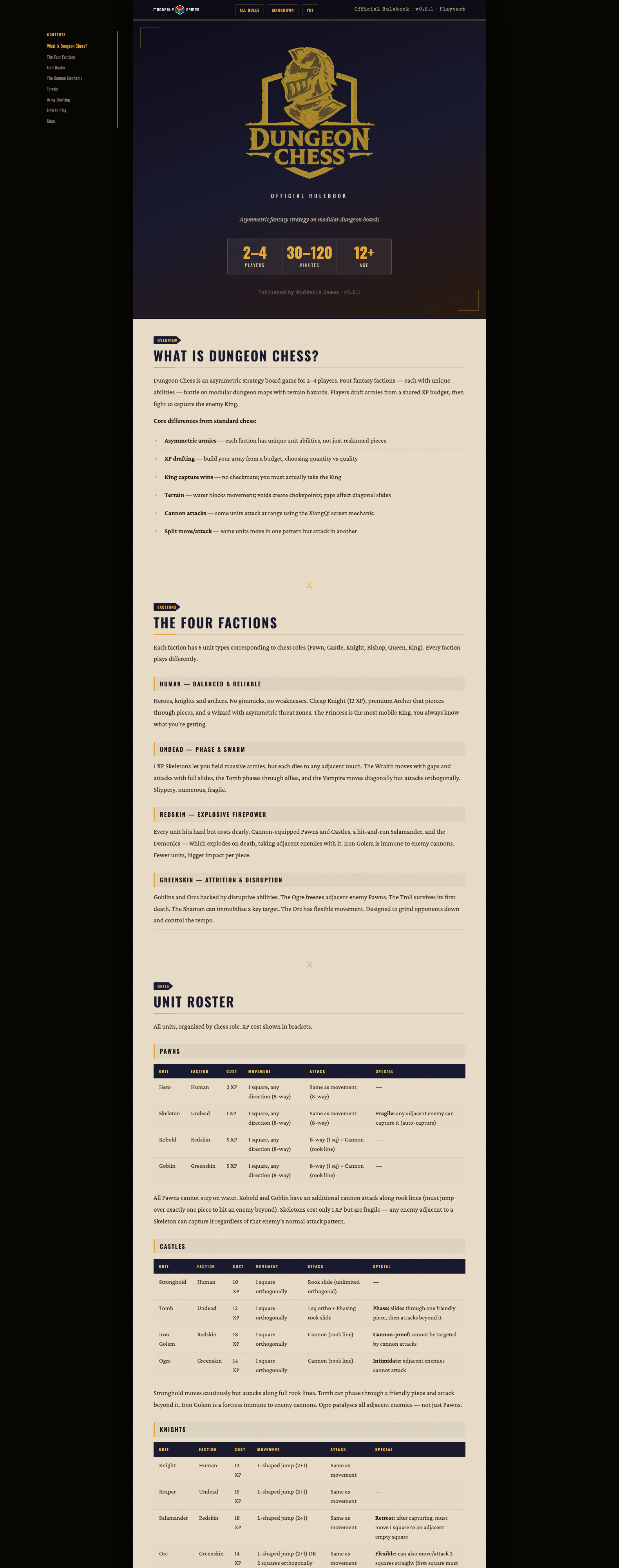
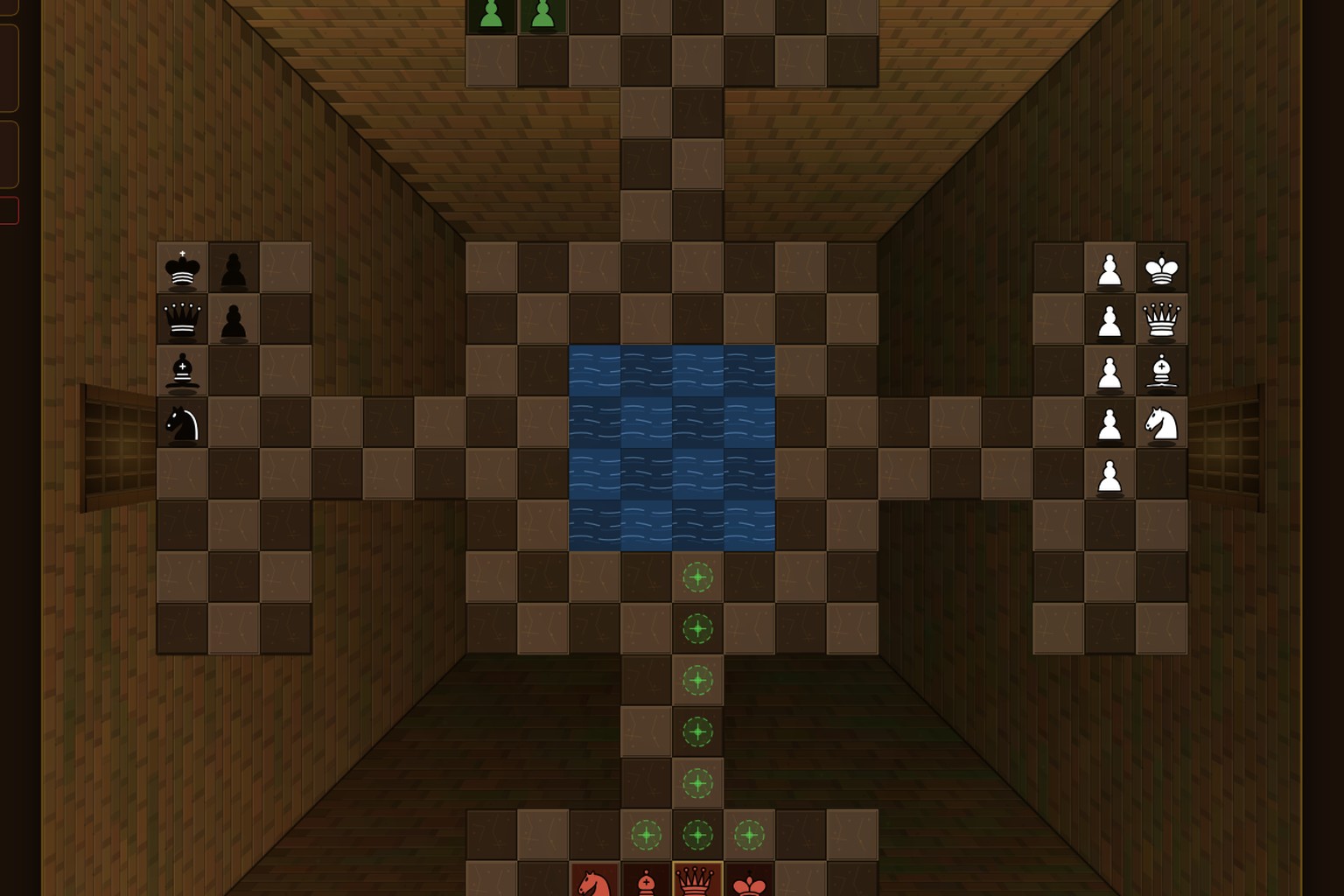
This is not a static PDF. The Dungeon Chess rulebook is written in markdown, version-controlled in Git, and compiled into both the formatted web page above and the data that powers the online game itself. When a rule changes in the source file, the website updates, the game engine synchronises, and every player sees the same version. One source of truth, multiple outputs. The rulebook is not documentation about the game. It is the game.
It already happened
Designers worry about dilution. Publishers worry about lost revenue. Artists worry about unlicensed use. These are legitimate concerns. However, open-source gaming is not a hypothetical future. It already happened, and the results speak for themselves.
In 2000, Wizards of the Coast released the Open Gaming License alongside Dungeons & Dragons 3rd Edition. The OGL allowed anyone to publish compatible content using the core d20 system. The result was not the collapse of D&D. It was an explosion of creativity. Thousands of third-party supplements, adventures, and entire game systems built on the same foundation. Pathfinder, D&D's much successful competitor of the 2010s, was born directly from the OGL. The license did not weaken D&D. It made D&D the centre of an ecosystem so large that it became culturally unavoidable.
Games Workshop took a different approach with Chapter Approved: publishing community-submitted rules, army lists and scenarios in official volumes. Players who created content saw it validated by the publisher. The community grew because contribution was rewarded, not punished.
Then there is chess. No trademark. No copyright. No publisher. It survived 1,500 years because anyone could teach it, modify it, and pass it on. The version we play today is simply the mod that won.
The three-layer model
The question isn't whether to open everything or lock it all down. It is which layers to open, and why. We arrived at a three-layer licensing model designed to give creators as much freedom as possible while keeping the shared commons healthy:
- Rules and mechanics: CC-BY-SA 4.0. Anyone can fork, remix, and sell. Derivatives must stay open so no one can take community creations private. You build on ours, others build on yours. The commons only grows.
- Engines and tools: MIT License. Embed, fork, extend freely. Build your own game on our chess engine or hexmap generator. No permission needed, no strings attached.
- Art and templates: Mostly open. Core brand assets (logo, identity) remain ours, but game artwork, component templates, and design systems will be openly licensed. We want creators to reskin, retheme, and build mods that look as polished as our own.
The ShareAlike clause is what holds it together. Modders can sell their work, build entire businesses on top of our rules, and create whatever they imagine. The only requirement is that derivatives stay open too. Every modification flows back into the ecosystem. The more people build, the more everyone benefits.
What we believe
The games that endure are the ones that communities invest in. Communities invest in things they can shape. The ancients proved this: the games that lasted 5,000 years had no IP protection. They survived because they were worth passing on, worth teaching, worth modifying for the next generation.
Every ruleset we publish is designed to be forked. Our engines are open-source. Our games are designed to be taken apart. Not because we are naive about the economics of publishing, but because we have seen what happens when players are invited to build rather than merely consume. They build things we never imagined. They find audiences we never reached. They carry the game further than any marketing budget ever could.
Open-source has not eliminated value in software. It has shifted where value lives. We believe the same shift is coming to the tabletop, and we intend to be standing in the right place when it arrives.