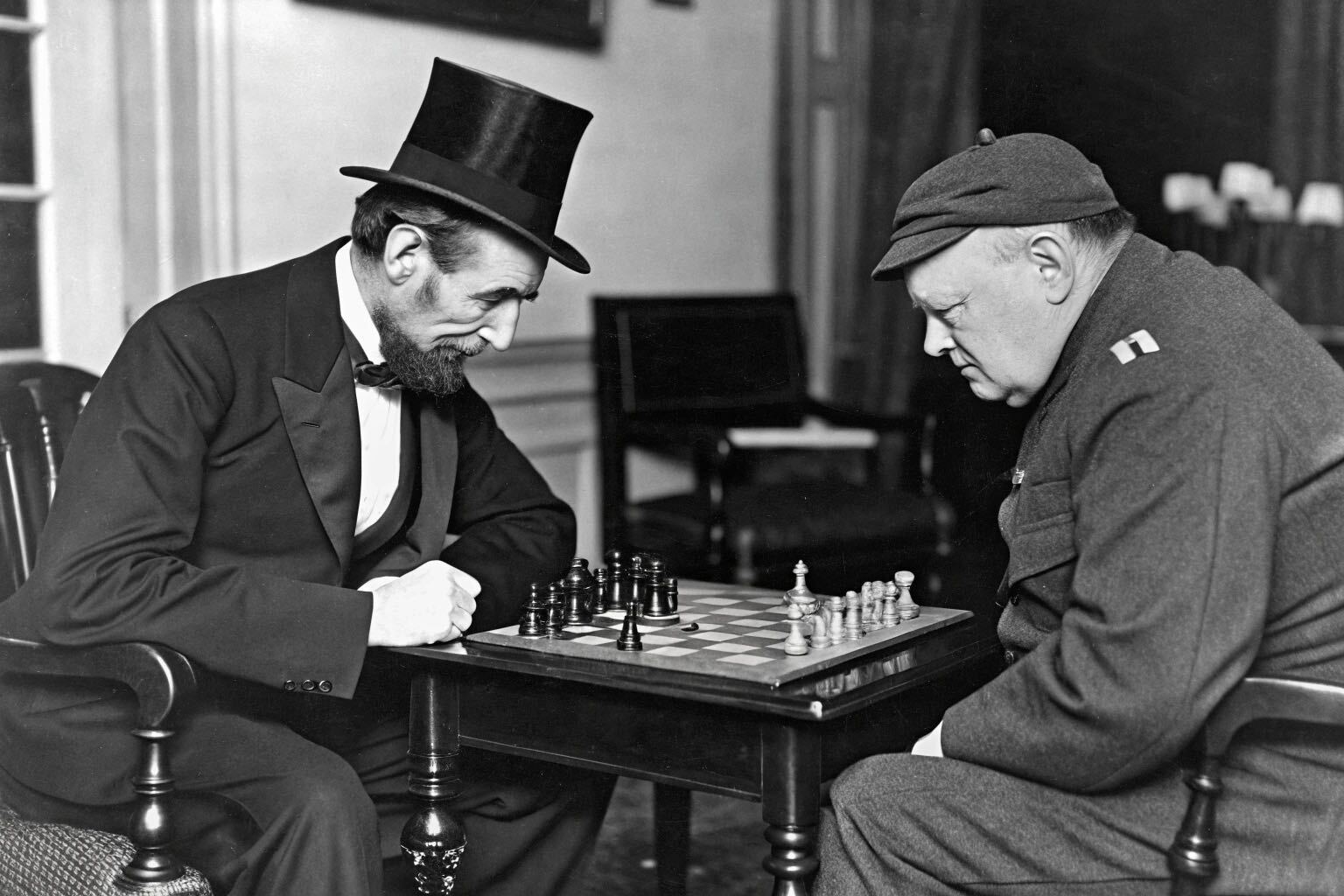
A long time ago on a silky road far, far away, somewhere between ancient India, Persia and the somewhat contentious corridors of history, a new tabletop game was born. Not just any game, but one that upon completing its thousand-year journey along the Silk Road and into Europe would eventually be gentrified into the most popular of games that remain today.
Chess is a battlefield with sixty-four squares that has been the playground of kings, warriors, nerds and world champions alike. It is a billion-dollar industry today, but its earliest roots can be found in India, where it grew from Chaturanga around the 6th century. The four divisions represented by its name were infantry, cavalry, elephants and chariots. In its earliest form over a thousand years ago the game could be modified to support four players, with some historians claiming that this version may have been the original.
The Silk Road transmissions
It first reached Persia and became Shatranj. It is here that we were given checkered squares of black and white, and also from where the game was gifted to the Arab world with an infamous special edition containing sixteen emerald pieces and sixteen ruby pieces. Shatranj also had its own variation: known today as Tamerlane Chess, the epic board contains 112 squares instead of the standard 64, featuring new pieces such as giraffes, camels, war machines and more. Most importantly, it is from within these regions and times that rules were properly published.
Something interesting happened when Chaturanga reached China, who were already developing their own astronomical games. By the 7th century Xiangqi emerged as the dominant variation within Asia. Even today, the international popularity of Xiangqi is at an all-time high, with several seasoned chess players preferring its streamlined efficiency. Xiangqi brings:
- River barrier dividing the board that elephants cannot cross
- Restricted palace zones for generals and advisors only
- Cannons that capture by jumping over intervening pieces, like checkers
- Opening checks possible from move one, making for a more direct game
Europe and the modern game
By the 9th century Shatranj had made its way over the Mongolian mountain-tops and into Russia, whilst also reaching Spain from the Middle East by the 10th century. It took a further five hundred years to survive the prohibitions and sanctions of the Christian church before emerging in the 15th century as the modern game we know today. Elephants became bishops and chariots became rooks as more religious undertones were added. Queens gained places on the board as European monarchies started to gain popularity over power.
It was somewhere between the 15th to 18th century that not only saw pawns allowed to move two on their first move, but also brought with it the infamous and often misunderstood en passant, included within the first international chess tournament in London in 1851.
The people who played
As the most modified game in history, it was the popularity of the written word that started to romanticise Chess by the 18th century. Kings used it to train on strategy, nobles flaunted it as intellectual clout and coffeehouses across Europe became the original tabletop sports arenas where gentlemen (and the occasional genius) spent hours trash-talking over wooden boards.
Napoleon Bonaparte was a notorious chess addict. He may have been brilliant on the actual battlefield, but on the chessboard? Not so much. He often blundered badly and got checkmated by his generals. There is even the Napoleon Attack named after him, though it is considered an aggressive and somewhat unsophisticated opening. Benjamin Franklin was an avid player who published The Morals of Chess, promoting the game for teaching "foresight, caution and perseverance."
From Abraham Lincoln to Winston Churchill, Albert Einstein to Stephen Hawking, John Lennon to Ray Charles, William Shakespeare to Oscar Wilde: chess has permeated the very fabric of culture, politics, science and art. It has inspired poems, revolutions and even a few bar fights.
The modern modding era
Because for all its prestige, chess can get... well, a little square. Over the years, brilliant (and possibly slightly bored) minds have decided the traditional board was not enough. They stretched, stacked and reimagined it with a hoard of quirky variations:
- 3D Chess — multi-level boards where pieces leap between layers
- Hexagonal Chess — Glinski's variant with diagonal pawns and chaos
- Alice Chess — two boards; pieces vanish from one, appear on the other
- Bughouse Chess — team variant; captures drop onto your partner's board
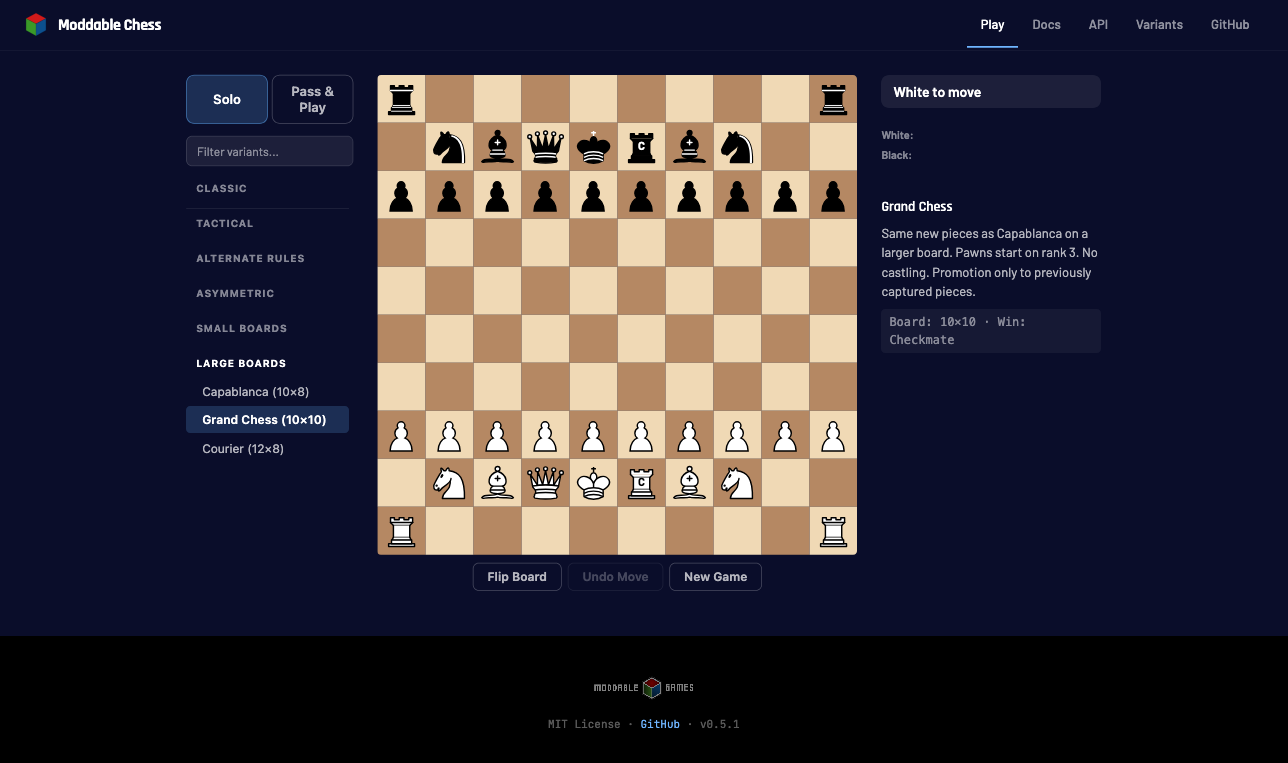
These are not obscure thought experiments. They are played competitively, published in books, and coded into engines. Chess has always been modified. The version we play today is simply the mod that won.
Why this matters to us
This history of continuous modification is what inspired Moddable.Games. If the greatest strategy game in human history is itself a mod (a Persian modification of an Indian game, further modified by Europeans) then modification is not a secondary activity. It is the primary creative act of game design.
Inspired by this, we wanted to design our own game. Something that could be as moddable as chess, free from the constraints of intellectual property and copyright laws. So motivated by 1,500 years of modification, we asked what chess would look like if designed today. The answer was hex tiles, modular boards, and generic pieces, which eventually became Nukes. The next chapter is up to you.