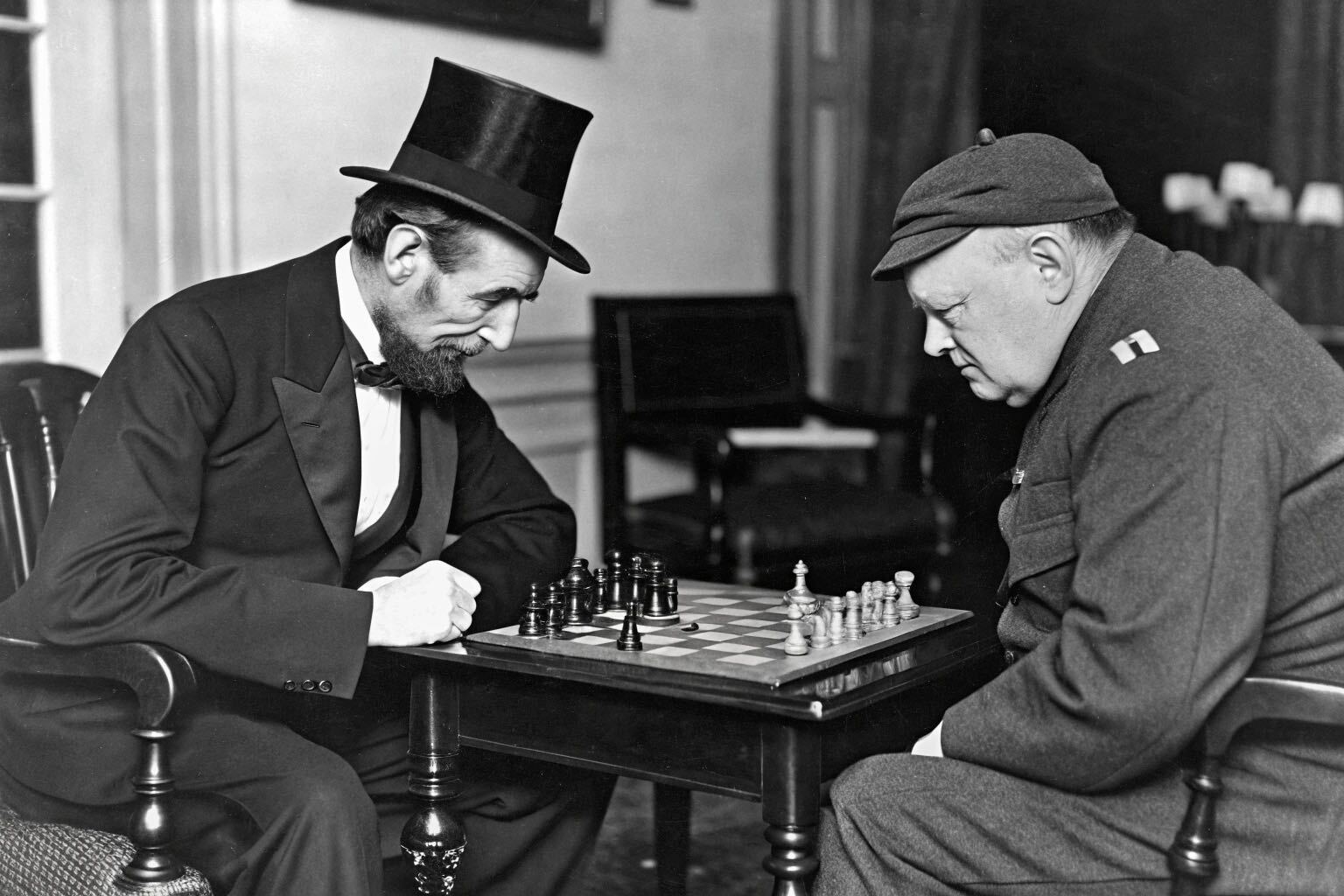
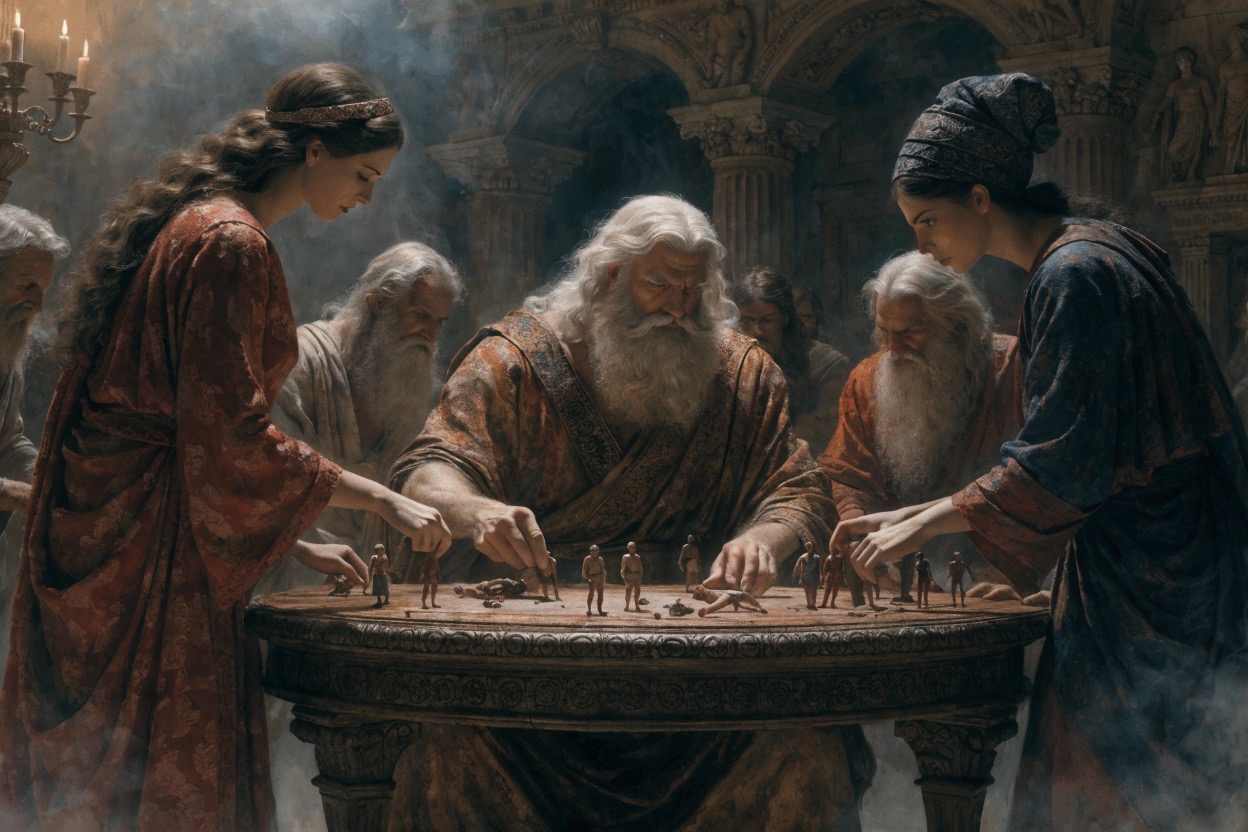
There's a phrase that floats around modern board gaming circles: the "cult of the new." It captures that familiar cycle of chasing the latest release, driven by curiosity, hype and just enough FOMO to keep shelves perpetually full and wallets continuously empty. Yet for all the attention we give to what's new, we rarely pause to consider what has already endured. Long before the absurdities of Gloomhaven's component count, before Catan was considered the ultimate gateway and even before Chess, humans were already designing games that would outlast entire civilisations.
Games older than history
When we reset our sense of time, the idea of what constitutes an old game shifts dramatically. Chess, at roughly 1,500 years old, feels ancient to most players. Go has been played continuously for over 4,000 years. Ashtapada (the grid that eventually gave rise to Chess) dates to approximately 600 BCE. Mancala, in its earliest pit-and-pebble forms, may be 8,000 years old.
These are not relics. They are living systems, still played daily by millions of people across continents:
- Mancala (~8,000 years) — pit-and-pebble optimisation, no publisher needed
- Go (~4,000 years) — emergent complexity from two piece types and one rule
- Ashtapada (~2,600 years) — grid movement that eventually became Chess
- Chess (~1,500 years) — unique pieces, the template for deterministic strategy

Ancient origins
Many of the mechanics we celebrate in modern design are not new inventions, but are rather rediscoveries rebroadcasted. Grid-based movement comes from Ashtapada. Area control and emergent complexity from Go, a game whose simple rules generate strategic depth that continues to challenge both humans and machines. Race mechanics and probability management from The Royal Game of Ur and Backgammon. Pattern-building from Nine Men's Morris and Checkers, both relying on forming structures and gradually constraining an opponent's options. Resource optimisation from Mancala's endless variants as worker placement origins.
These ancient systems were solving the same design problems we wrestle with today: how to make decisions meaningful, how to balance skill against chance, and how to keep players engaged across repeated plays. The same problems we explored in Conquering the Constraints of Chess.
Games as cultural fabric
Beyond mechanics, what is perhaps most compelling is the role these games played within their societies. Senet was not merely entertainment in ancient Egypt. It reflected spiritual beliefs about the journey to the afterlife. Mehen, with its coiled serpent board, carried mythological weight. In China, mastery of Go ranked alongside calligraphy, painting, and music as one of the four essential arts of the scholar.
"These games were woven into the fabric of culture itself, not sold as products but shared as inheritance."
What made them last
The games that endured for millennia had no intellectual property protections. No monetisation funnels. No planned obsolescence. They survived because they were:
- Simple enough to be learned quickly
- Flexible enough to be adapted across contexts
- Deep enough to remain engaging across a lifetime
They were, in the truest sense, moddable. Long before that word existed. Players recreated them from memory, carved boards from whatever materials were at hand, taught them to children who taught them to their own children. This is the same open-source principle we are building on today.
Evolution over replacement
The modern industry often encourages replacement rather than evolution. New editions obsolete old ones. Expansions fragment communities. Innovation is framed as novelty rather than depth. Gloomhaven has already spawned four distinct versions in six years. Catan has been rebranded, rethemed, and repackaged more times than most players can track. Ticket to Ride has over fifteen regional expansions that split the player base rather than deepen it.
Compare this to Go, which has one set of rules and has sustained billions of games across four millennia. Or Mancala, which spread across an entire continent through oral tradition alone, adapting to every culture it touched without a single reprint, rebrand or Kickstarter. The ancients did not need planned obsolescence. They built systems deep enough that players never stopped finding new things inside them.
Building to last
The question facing modern designers is not simply how to create the next successful game, but whether it's possible to design something that people will continue to play, adapt, mod and share long into the future. The oldest games were not built for markets. They were built for people, and it was the community, not the publishers, who ensured their survival.
That is the principle we keep coming back to. Design for modification. Design for community ownership. Design for the long game. It is why Nukes uses generic components, why our engines are open-source, and why every game we ship is designed to be taken apart.