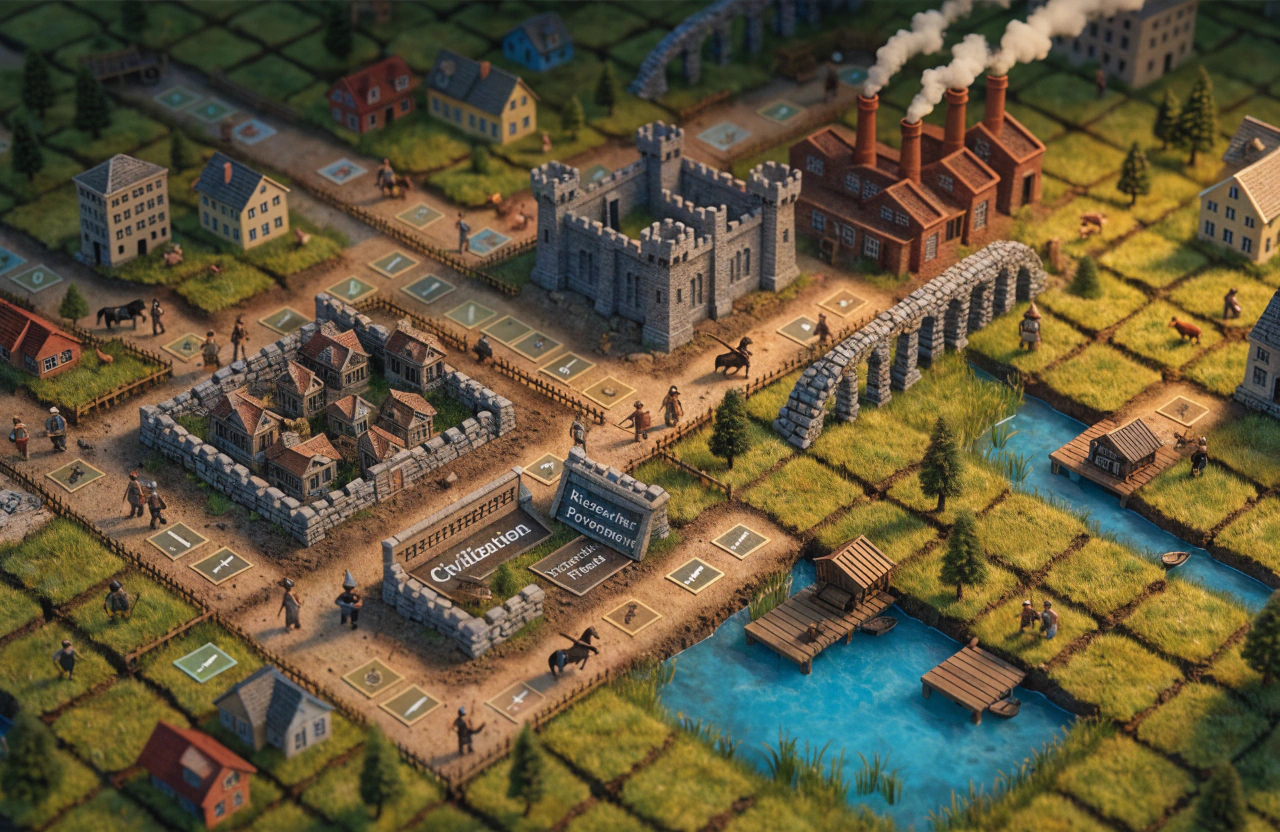
In 1980, a RAF radio instructor in Wales published a board game that invented the technology tree. Eleven years later, a video game studio in Maryland turned that idea into the most influential strategy franchise in computing history. Then, inevitably, the video game became a board game again. This is the story of the Civilization loop: board to screen to board, and what it tells us about the membrane between physical and digital games.
Wales, 1974
Francis Tresham found the Pergamon General Historical Atlas in the library at RAF St Athan and became obsessed with how civilisations co-exist along natural frontiers. He already had form: in 1974, he published 1829, inventing the 18xx railway stock genre from scratch. Now he wanted to design a game about civilisational advancement that rejected the dominant design philosophy of its era.
His target was Diplomacy. He hated it.
"I am not by nature either a liar or a swindler."
Where Diplomacy rewarded betrayal, Tresham wanted a game where victory came through cultural and technological progress. The result was Civilization, published by Hartland Trefoil in 1980, picked up by Avalon Hill for the US market in 1981. It seated up to seven players, ran four to eight hours, and contained a mechanic that had never existed in any game before: the technology tree.
The digital leap
Avalon Hill made the first computer adaptation in 1984: Incunabula. It was modest. Nobody remembers it.
Then came 1991. MicroProse released Sid Meier's Civilization). It sold 1.5 million copies. The series has since shifted over 40 million units across seven main instalments and dozens of expansions. It enshrined the technology tree in the DNA of an entire genre.
The connection between the two games was not abstract. The video game was co-developed by Bruce Shelley, who had previously worked at Avalon Hill adapting Tresham's 1829 as 1830: Railways and Robber Barons. Shelley brought Avalon Hill's board game sensibility directly into Meier's design process. MicroProse licensed the Civilization name from Avalon Hill, and a legal dispute over that name erupted in the late 1990s.
Meier has consistently played down the influence of Tresham's game on his own design. Tresham, characteristically dry:
"I am sure that all sorts of people like to think that they had far more to do with the origination of this game system than I did. They can think what they like. Before 1950 there wasn't a game called Civilization, and now there is."
The detour Tresham hates
The same year Meier's game launched, Avalon Hill released Advanced Civilization: a major overhaul of the original board game, developed without Tresham's involvement. More cards, more civilisations, more complexity.
His verdict was immediate:
"A routine example of the American philosophy of find something that is very good, mess it about, add complications and then try and market the result. For profit."
It is a sentiment familiar to anyone who has watched a publisher "improve" a game by adding weight rather than depth. More components does not mean more design. More rules does not mean more decisions. Sometimes the original was already right.
The loop closes
The video game franchise grew so large that it spawned its own board game adaptations. Glenn Drover designed one in 2002, based on Civilization III. Fantasy Flight published another in 2010, designed by Kevin Wilson, based on the Meier series. The ideas that started in a physical game, migrated to digital, and were now physical again, shaped by the video game rather than the original board game.
- 1980 — Tresham's board game invents the tech tree
- 1991 — Meier's video game absorbs the concept, scales it globally
- 2002 — Drover's board game adapts the video game back to cardboard
- 2010 — Fantasy Flight's version completes the full loop
By 2010, the loop was complete. A board game inspired a video game that inspired a board game. The mechanics had mutated at each crossing: the tech tree grew from a dozen advances to hundreds, the map shifted from static trade routes to procedurally generated continents, the victory conditions multiplied. Each medium shaped the idea differently. But the core, the cascading unlock structure that Tresham sketched in a Welsh barracks, remained recognisable throughout.
The return of the original
In 2018, Gibsons republished Tresham's original Civilization. Unchanged. Same rules, updated art. The first time it had been widely available in decades. At the launch, Tresham said:
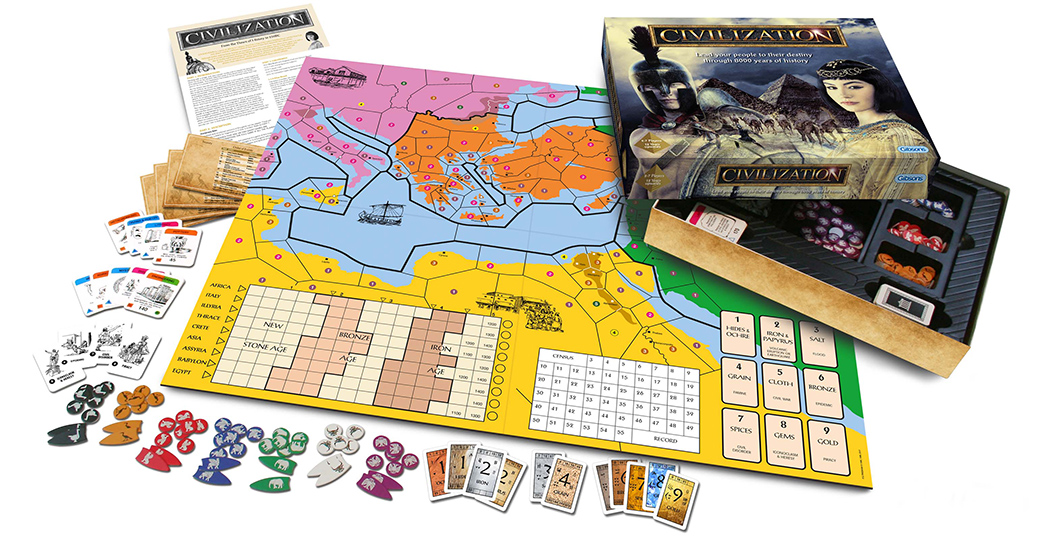
"Come back in 200 years' time and you will find, somewhere, somehow, people playing this game far better than either of us can now."
He died in 2019. The game remains in print.
Why this matters
The Civilization loop is not an anomaly. It is the clearest example of a pattern that repeats throughout gaming history. Ideas flow freely between physical and digital mediums, mutating and expanding at each crossing. The technology tree was born on paper. It became one of computing's most durable design patterns. It came back to paper transformed. The full story of Tresham's journey is well worth reading.
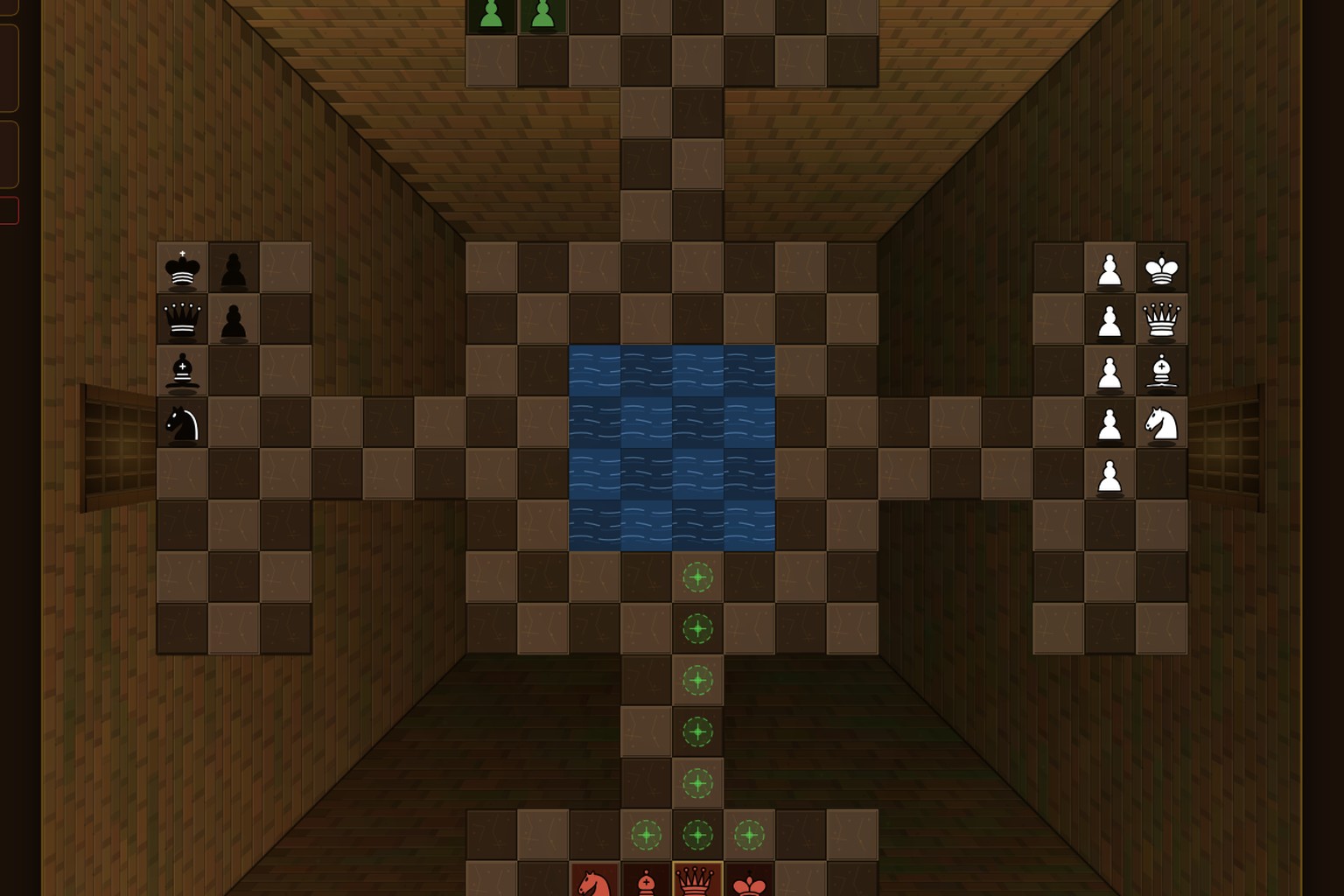
This is the territory Moddable builds in. The border between physical and digital games is not a wall. It is a membrane, and ideas have always passed through it in both directions. Our chess engine encodes rules that existed for centuries before computers. Our hex map system digitises a spatial language invented for wargame tables in the 1960s. The infrastructure we build exists precisely at this crossing point.
The Civilization loop proves that the crossing is not just possible. It is inevitable. The only question is who builds the bridges.